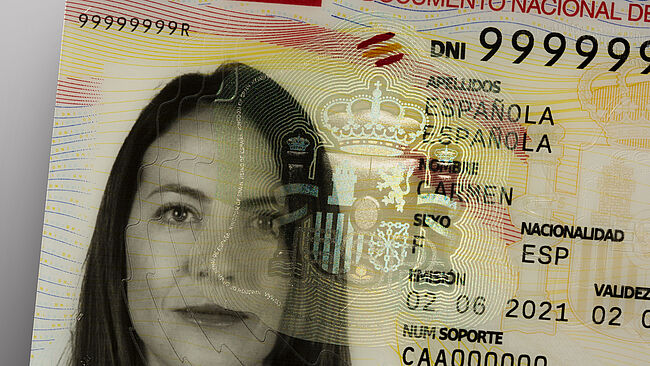
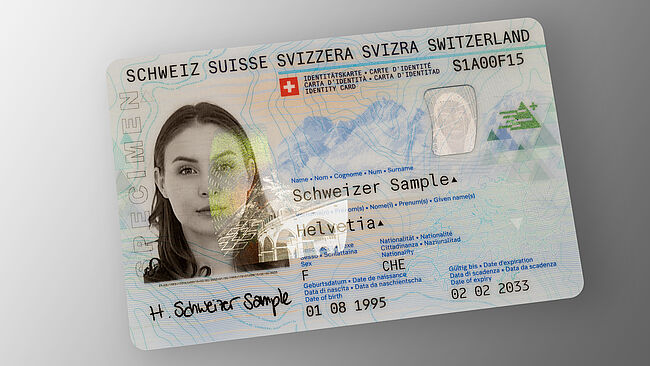
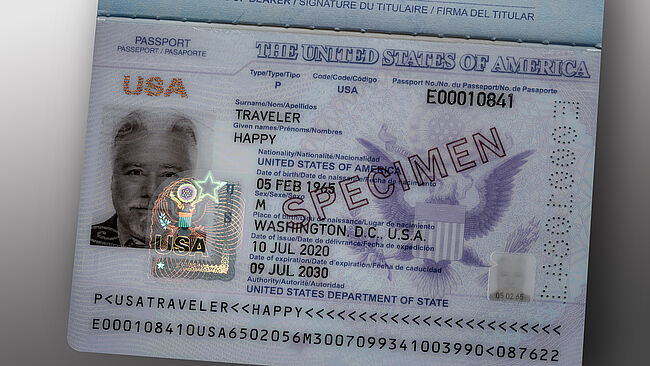
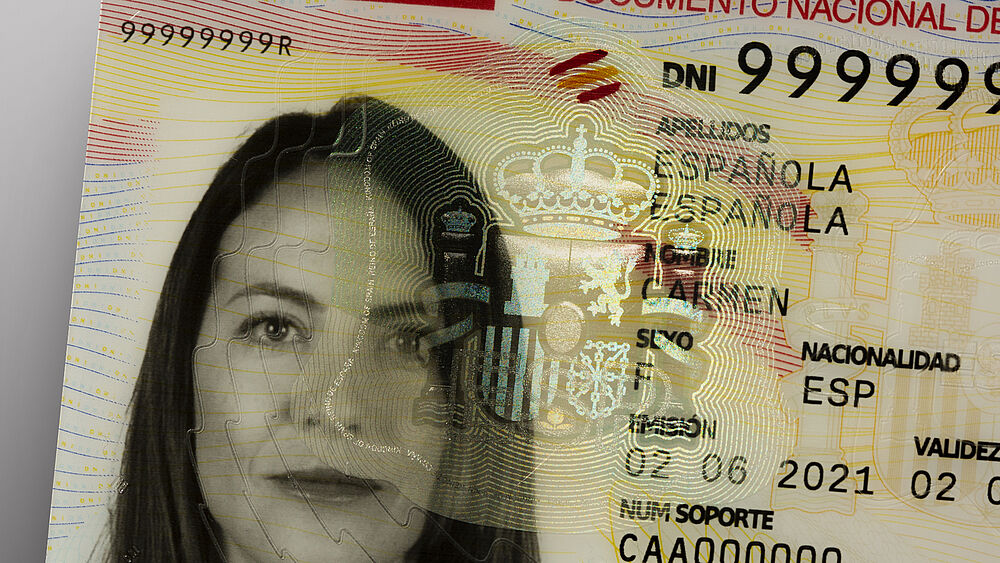
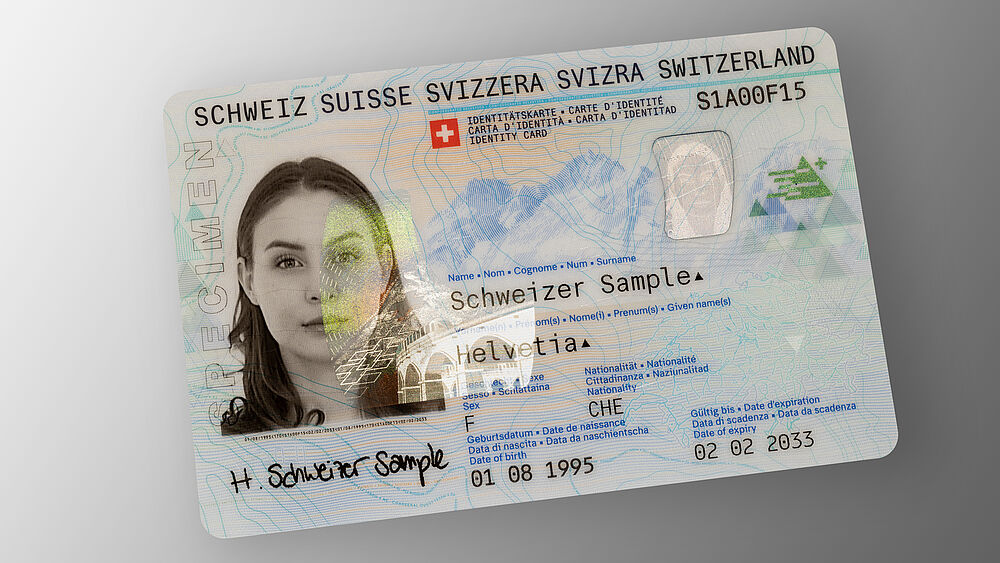
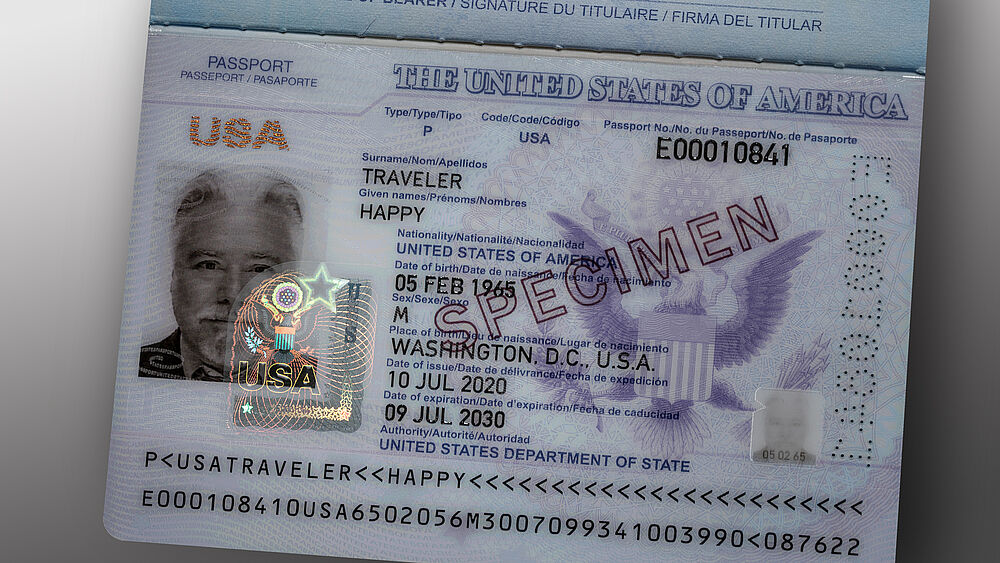
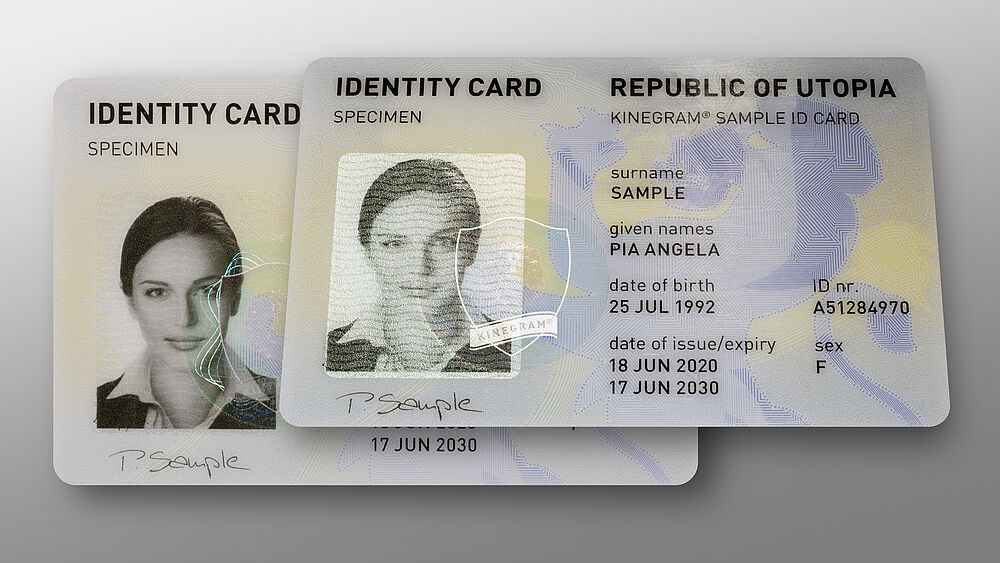
The utilization of polycarbonate substrate for passport data pages or ID cards is state-of-the-art for modern identity documents. Recognized for its durability and comparatively better tamper resistance, polycarbonate provides a robust foundation for safeguarding the personal information within the documents.
The document holder’s photograph and personal data are incorporated into an internal substrate layer by laser personalization, and the substrate’s abrasion resistance protects them mechanically. This makes polycarbonate substrate a contributor to the overall security of a passport or ID card – but it is not inherently counterfeit-proof. That’s where the KINEGRAM comes in.
Why the KINEGRAM is pivotal for securing polycarbonate documents
DOVIDs (diffractive optically variable image devices) such as the KINEGRAM are a principal addition to the security architecture of documents. They play a pivotal role in fortifying polycarbonate-based documents against counterfeiting and manipulation.
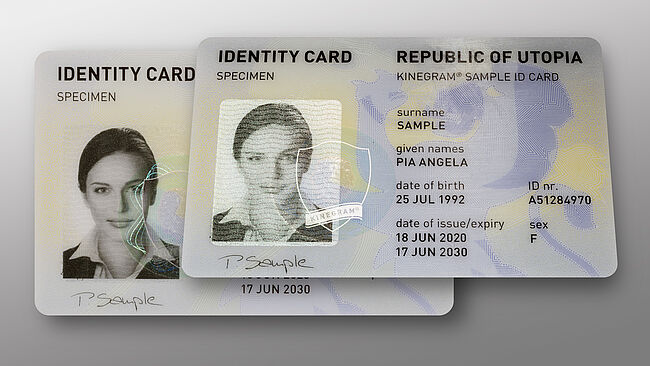
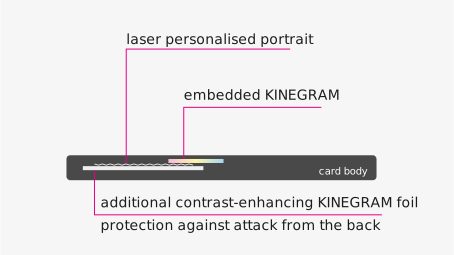
While the holder’s photograph and personal data are incorporated by laser, a KINEGRAM is embedded into the card body or data page body during its production process, at a layer just above the laserable polycarbonate layer that incorporates the portrait image and personal data. Therefore, any attempts to attack the photo from the front of the document will lead to visible damage to the KINEGRAM – a formidable challenge to counterfeiters.
But what about attacks from the reverse?